Daniel Farson's Guide To Britain Vol 2
Daniel Farson's Guide To Britain Vol 2
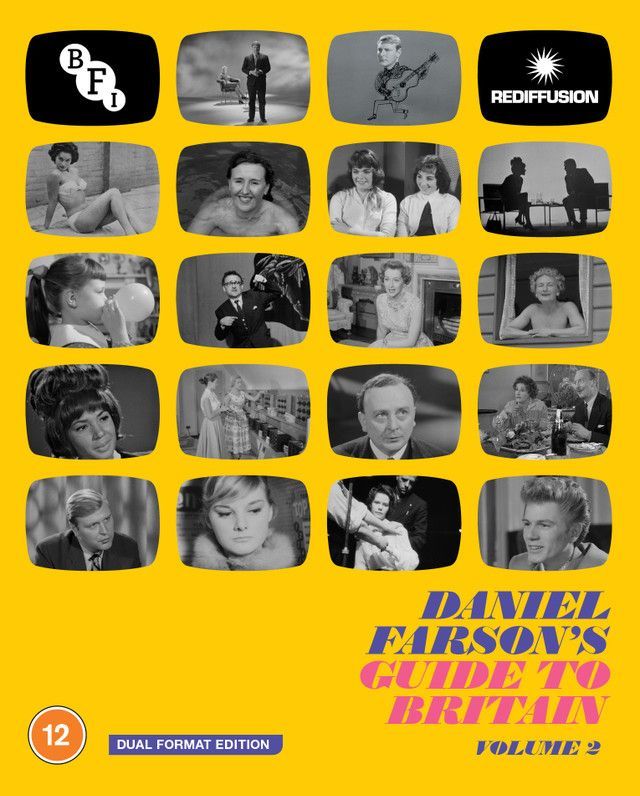
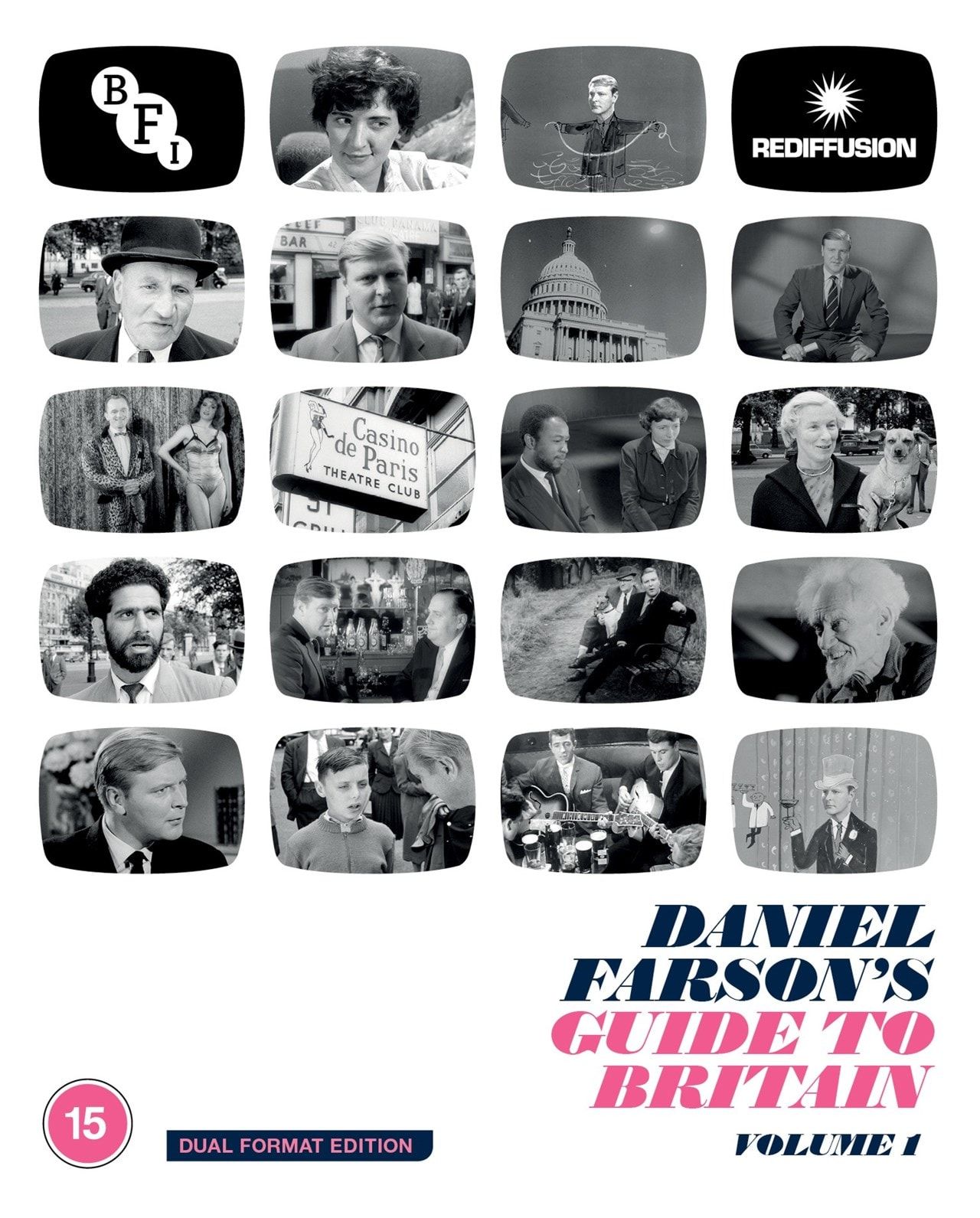
Daniel Farson’s Guide to Britain Vol 2 (BFI Dual Format DVD/BluRay BFIB1560 Rated 15)
If, like me, you enjoyed the first volume of Daniel Farson’s perambulations around Britain’s more off-beat subjects, you’ll be delighted to hear that another volume has just been released. Those new to these byways of 50’s/60’s television are encouraged to read on.
The very social and famously thirsty Mr. Farson takes us into the world of nudism from 1957, then a risque subject. His interviews with various families in their natural habitat prove that their preference for being au naturel is anything but prurient. Farson alone keeps his suit of clothes on and the face-to-face interviews are conducted whilst healthy, sporting activities carry on, a long way from the camera. Short vox pops with random uptight Brits in the street are predictably fussy and disapproving, in stark contrast to the relaxed, happy nudists.
‘Tune in to Nature’s Radio’ takes us into the strangely earnest and inexplicably popular world of fringe medicine. The ‘radionics practitioner’ George de la Warr, reclining in his large country house, takes us round his laboratory of highly impressive electronic equipment, said to treat and cure illnesses of living things, including man, in their absence. Leaves are subjected to rays and the plant they were separated from recovers its verdant bloom. It isn’t long before the claims of cures for human ailments start to surface. The interview with the affable Mr. de la Warr is conducted respectfully enough, although the science he uses to treat his ‘patients’ is hard to grasp, both by Farson and ourselves. Following his decease, the subject of radionic medicine seemed to die with Mr. de la Warr.
The more serious subjects of pacifism and protest are dealt with by interviewing the brave Mr. Harold Steel, whose decision to register his revulsion at nuclear bomb tests by travelling to the proposed site of a test and deliberately walking into it, hoped to bring the tests to a halt. Among the most interesting of the ‘Out of Step’ series, his is a name that should perhaps be better known today.
‘The Seventh Day’ sees Farson back on the everyday controversies that enlivened debate at the time, about the now thankfully forgotten ‘Lord’s Day Observance Society’. Unwavering in their belief that Britain, as a Christian country, should see that no work is carried out on the Sabbath, no papers delivered and Church attendance enforced. Anyone who recalls the uniformly dreary Sabbath days of the period may have to suppress a shudder as their leader puts forward the views he is sure are the correct ones for all to follow.
‘This England’ is far more relevant and searching, as it takes on the perceived diminished status of the country doctor and the parson in society and the lack of discipline and order in the young. Farson will return to the latter subject, later on.
‘Sex Education’ is another eye-opening article, the invited academics and experts largely agreeing that this education cannot start too young, whilst a rather eccentric clergyman argues precisely the opposite. Other invitees include some who married young, knowing virtually nothing of sex. This is followed, appropriately enough, by an intelligent and revealing programme about unmarried mothers. The invited mothers generally display a great deal of maturity and commonsense, from an age when many people frowned on such women, however they arrived at their state in life.
Those with a taste for the baroque will find the evening with television cook and tagalong spouse Fanny and Johnny Cradock spine-tinglingly enlivening. The first of the ‘Success Story’ segment, apparently conducted in their elegant home, the Cradocks invite Farson round for a sophisticated dinner party. Fanny’s supercilious tone is evident from the start, eyes bulging beside her pointed nose in a manner horribly reminiscent of one Margaret Thatcher. By contrast, Farson’s attuned eye spots that some parts of the Plateau de Fruits de Mer appear a little lively, an observation state brushed side by Fanny as if shooing away a fly from her soup.
Other success stories include the redoubtable Harry Edwards, another of the faith healing fraternity, whose claims to cure even cancer must have sounded dubious even at a time when no conventional treatment for this terrible disease was available. The family of Lady Lewisham, stuffed to the gills as it was by the highly talented and charitable makes for compulsive viewing, although their famous relative, authoress Barbara Cartland, is barely mentioned.
The remaining segments include fascinating interviews with the very young Shirley Ann Field, wise and perceptive beyond her years, Shirley Bassey, hot from her early success as a popular singer and content to talk as much about her exciting life at the time, as her tough upbringing. The last is perhaps the jewel in the crown of this selection, ‘Living for Kicks’, an exploration of the newly emergent young, out of school, earning good money and away from the stifling influence of parents and self-appointed leaders. Some a little shy in front of the camera, others cocky and combative, the programme lifts the lid on youth culture at its birth, long before the social historians and ‘experts’ crept in to spoil the fun.
If I have any grumbles about the selections on offer here, it is only that there aren’t more of them. Wholly recommended.
Scenester
27/9/26
Buy here: https://shop.bfi.org.uk/daniel-farson-s-guide-to-britain-vol-2-dual-format-edition